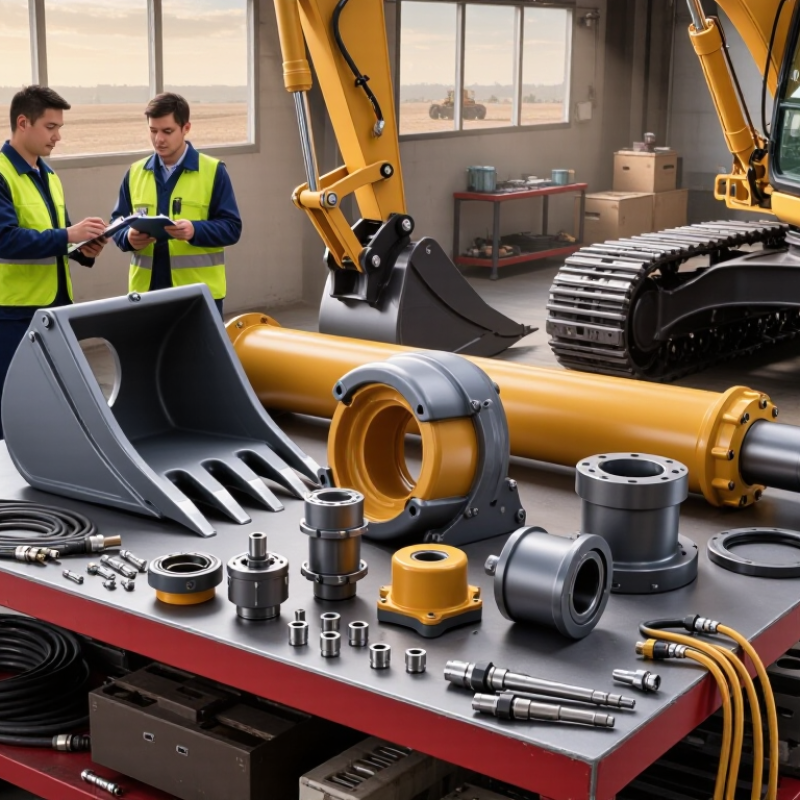
Bucket
Work attachment |
Excavates, scoops, carries, and deposits soil, rock, sand, or other materials. |
General digging, trenching, loading, grading, or heavy-duty rock excavation. |
Capacity must match the machine's rated lift and hydraulic capability. Cutting edges and side plates should resist abrasion and impact. |
Bucket capacity, opening width, pin diameter, pin-to-pin distance, arm width, and digging depth. |
Wear-resistant steel for cutting edges, adapters, teeth, and high-abrasion areas; reinforced steel for heavy-duty applications. |
Check teeth, adapters, cutting edge, welds, side cutters, and pin holes. Replace parts when cracking, excessive rounding, or hole enlargement affects fit or digging efficiency. |
Hydraulic Cylinder
Hydraulic actuator |
Converts hydraulic pressure into linear force for the boom, arm, bucket, or blade. |
High-pressure operation with repeated extension and retraction cycles. |
Correct rated pressure, smooth movement, leak resistance, adequate rod strength, and reliable seal performance. |
Bore diameter, rod diameter, stroke length, retracted length, mounting pin size, and port location. |
Chrome-plated or corrosion-resistant piston rod; honed cylinder tube; seals compatible with the specified hydraulic fluid. |
Inspect for oil leakage, rod pitting, scoring, bent rods, damaged mounts, and abnormal movement. Confirm pressure ratings and dimensions before installation. |
Hydraulic Pump
Power transmission |
Converts engine power into hydraulic flow and pressure for travel, digging, steering, and auxiliary functions. |
Continuous duty, variable loads, high pressure, and changing engine speeds. |
Correct displacement, rated pressure, flow output, efficiency, low pulsation, and compatibility with the control system. |
Pump type, displacement, rotation direction, shaft configuration, mounting pattern, control method, and port arrangement. |
Precision-machined components with suitable wear resistance and clean internal passages. |
Check hydraulic oil cleanliness, case-drain flow, abnormal noise, overheating, and loss of machine speed or force. Contamination is a common cause of premature failure. |
Hydraulic Motor
Travel or swing system |
Converts hydraulic flow into rotary motion for travel drives, swing systems, or auxiliary attachments. |
High torque, frequent direction changes, shock loads, and low-speed operation. |
Required torque, displacement, pressure rating, speed range, braking capability, and resistance to shock loading. |
Displacement per revolution, mounting flange, shaft or spline, port size, brake configuration, and rotation requirements. |
Hardened drive components, precision bearings, durable seals, and correctly matched planetary reduction gears where applicable. |
Inspect for leakage, excessive case-drain flow, unusual noise, weak travel, uneven rotation, and overheating. Match the motor to the final drive or swing gearbox. |
Final Drive Assembly
Travel component |
Reduces hydraulic motor speed and increases torque to drive the track sprocket. |
Continuous travel, slopes, uneven ground, mud, and high shock loads. |
High torque capacity, accurate gear alignment, effective lubrication, and reliable sealing against dirt and water. |
Reduction ratio, mounting bolt pattern, sprocket interface, travel motor connection, track width, and gear oil capacity. |
Heat-treated gears, durable bearings, robust housing, and high-quality mechanical face seals. |
Check oil level and metal contamination, seal leakage, gear noise, abnormal heat, and sprocket movement. Use the correct gear oil and maintain track tension. |
Track Chain
Undercarriage |
Provides the continuous rolling surface that transfers machine power to the ground. |
Rock, clay, sand, mud, abrasive soil, and frequent travel over uneven terrain. |
High tensile strength, wear resistance, correct pitch, reliable bushing life, and resistance to link cracking. |
Track pitch, number of links, link width, shoe width, bushing diameter, pin diameter, and bolt pattern. |
Heat-treated alloy steel links, pins, and bushings designed for abrasion and impact resistance. |
Measure pitch elongation and bushing wear. Inspect links, pins, bushings, and master link areas for cracks, looseness, and uneven wear. |
Track Shoe
Ground-contact part |
Supports the machine and provides traction while distributing ground pressure. |
Soft soil, hard ground, rocky surfaces, paved areas, or mixed job-site conditions. |
Suitable traction, adequate plate strength, controlled ground pressure, and resistance to bending and cracking. |
Width, number of grousers, bolt-hole spacing, shoe thickness, and compatibility with the track chain. |
Wear-resistant steel; single-grouser shoes are commonly used for general traction, while wider shoes can reduce ground pressure. |
Check for bent or cracked shoes, loose bolts, excessive grouser wear, and mismatched shoe widths. Choose the narrowest width that meets flotation needs. |
Track Roller
Undercarriage |
Supports the track chain and guides it along the lower undercarriage frame. |
High vertical loads, abrasive material, water, mud, and repeated travel cycles. |
Strong load capacity, effective sealing, smooth rotation, low rolling resistance, and long wear life. |
Single or double flange, flange diameter, mounting bolt pattern, roller width, and shaft dimensions. |
Hardened steel running surfaces, sealed lubrication system, durable bushings, and heavy-duty floating seals. |
Inspect for oil leakage, seized rotation, flange wear, abnormal noise, and uneven track contact. Replace damaged rollers promptly to prevent chain and frame damage. |
Idler Assembly
Track guide |
Guides the track chain at the front or rear of the undercarriage and maintains track alignment. |
Continuous track movement with tension loads, impacts, mud, and abrasive debris. |
Correct alignment, durable rim surface, reliable seals, and compatibility with the track tensioning system. |
Rim diameter, width, flange profile, guide arrangement, mounting dimensions, and recoil spring interface. |
Heat-treated steel rim, sealed bearings or bushings, and a robust tensioning arrangement. |
Check rim wear, oil leakage, side-to-side movement, alignment, and recoil spring condition. Incorrect track tension accelerates idler and track wear. |
Sprocket
Drive component |
Engages with track bushings to transfer torque from the final drive to the track chain. |
High torque, frequent direction changes, abrasive soil, and heavy pulling loads. |
Accurate tooth profile, high wear resistance, correct pitch, and secure attachment to the final drive. |
Number of teeth, pitch, bolt-hole pattern, offset, hub dimensions, and compatibility with the track chain. |
Cast or forged alloy steel with hardened tooth surfaces for improved wear resistance. |
Inspect tooth height, hooking, cracking, loose bolts, and uneven wear. Replace the sprocket when tooth wear no longer matches the track bushing profile. |
Air, Fuel, and Hydraulic Filters
Filtration system |
Remove dust, water, metal particles, and other contaminants from intake air, fuel, or hydraulic oil. |
Dusty, humid, dirty, or high-temperature work environments. |
Correct filtration efficiency, flow capacity, pressure-drop limit, seal quality, and service interval. |
Filter dimensions, thread or port size, bypass-valve setting, micron rating, flow direction, and sealing surface. |
Filter media and seals must be compatible with the application and operating fluid. |
Use the specified replacement interval or shorten it in severe dust or contamination conditions. Never substitute a filter with an incorrect bypass setting. |
Engine Cooling Components
Thermal management |
Remove heat from the engine and hydraulic system to maintain safe operating temperatures. |
High ambient temperatures, heavy digging, blocked airflow, and dusty work sites. |
Adequate heat-transfer capacity, proper airflow, reliable pressure control, and resistance to vibration and corrosion. |
Core dimensions, fin density, hose connections, pressure rating, fan clearance, and coolant compatibility. |
Corrosion-resistant cores, durable hoses, vibration-resistant mounts, and coolant-compatible seals. |
Inspect for blocked fins, coolant leaks, damaged hoses, loose mounts, and overheating. Clean with suitable pressure to avoid bending fins. |
Swing Bearing
Upper-structure support |
Supports the upper structure and allows it to rotate relative to the undercarriage. |
High overturning moments, cyclic swing loads, vibration, and contaminated job-site conditions. |
High axial and radial load capacity, accurate gear engagement, low backlash, and reliable lubrication. |
Outer and inner diameter, mounting-hole pattern, gear tooth count, gear position, and bolt grade requirements. |
Hardened raceways and gear teeth, precision-machined rings, and durable seals. |
Monitor backlash, abnormal noise, grease condition, bolt torque, and gear wear. Follow the correct lubrication schedule and mounting procedure. |
Boom, Arm, and Bucket Pins
Linkage hardware |
Form the pivot points that connect the boom, arm, bucket, and hydraulic cylinders. |
Repeated oscillating loads, shock loading, dirt ingress, and high bending forces. |
Correct hardness, dimensional accuracy, surface finish, and resistance to bending, galling, and wear. |
Pin diameter, length, grease-hole location, retaining method, and bushing clearance. |
Hardened alloy steel with suitable surface hardness and corrosion protection. |
Inspect for scoring, ovality, looseness, grease blockage, and damaged retainers. Replace or recondition pins and bushings as a matched wear set when necessary. |
Boom, Arm, and Bucket Bushings
Wear component |
Provide a replaceable bearing surface between pins and linkage bores. |
Oscillating movement under heavy loads with exposure to dust, water, and abrasive particles. |
Correct interference fit, low friction, strong load capacity, and resistance to scoring and deformation. |
Inside diameter, outside diameter, length, flange dimensions, lubrication grooves, and installation tolerance. |
Hardened bearing steel or suitable composite bearing material according to the application. |
Check clearance, rotation marks, cracking, and lubrication condition. Measure bores and pins before ordering to avoid premature looseness. |
Electrical Sensors and Switches
Control and monitoring |
Monitor pressure, temperature, position, speed, fluid level, or engine operating conditions. |
Vibration, moisture, temperature changes, electrical load variation, and contamination. |
Correct signal range, response time, connector compatibility, environmental protection, and stable calibration. |
Sensor type, operating range, thread size, connector, wiring configuration, mounting position, and output signal. |
Sealed housings, vibration-resistant connectors, corrosion-resistant terminals, and application-compatible sensing elements. |
Verify fault codes and wiring before replacement. Check connector corrosion, damaged insulation, ground quality, and supply voltage. |
 Wheel Loader
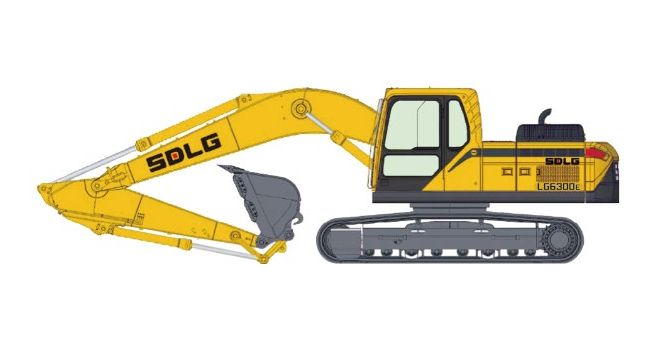 Excavator
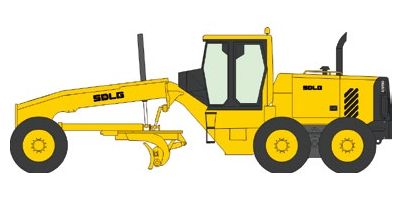 Motor Grader
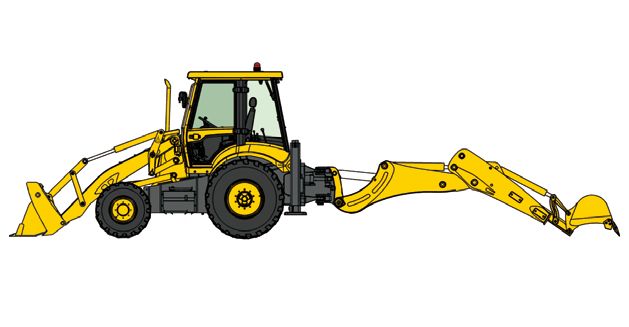 Backhoe Loader
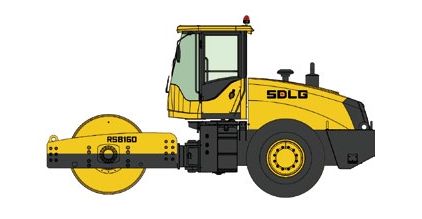 Road Roller
 Spare Parts